Arthur Clifford Stribling
Biography
Role: Son of Alfred George Stribling and Jane Murray (Farrow) Stribling — Telfer in-law line (Farrow branch, grandson of Charles Farrow & Elizabeth Hannah Telfer)
Born: 4 February 1890 — Tarlee, South Australia (verified — AIF attestation, IWM Lives of the First World War, and two 1918 newspaper notices)
Died: 25 April 1918 (aged 28) — wounded in action near Villers-Bretonneux, France, died of wounds the same day (Second Battle of Villers-Bretonneux)
Buried: Blangy-Tronville Communal Cemetery, Département de la Somme, Picardie, France — Grave 22
Parents: Alfred George Stribling and Jane Murray Farrow Stribling, of Rutland Avenue, Brighton, South Australia
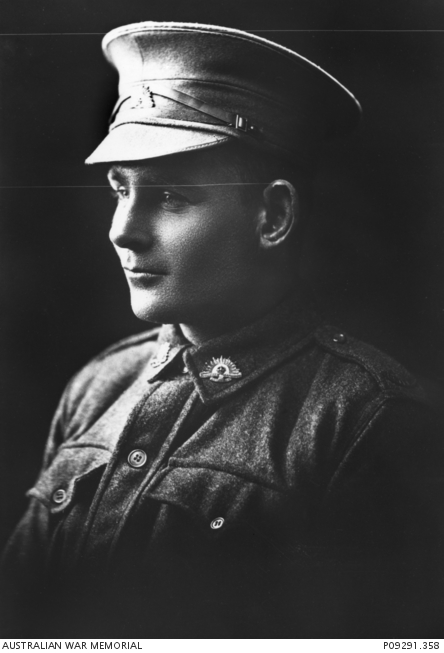
Photograph
Family
| Relation | Name |
|---|---|
| Father | Alfred George Stribling |
| Mother | Jane Murray Farrow (1857–1934) (née Farrow, m. Alfred George Stribling c. 1885) |
Siblings
| Sibling | Lifespan |
|---|---|
| Lindsay Ellis Stribling | 1893–1979 |
| George Charles Stribling | 1898–1988 |
Life Summary
Arthur Clifford "Cliff" Stribling was born 4 February 1890 at Tarlee, South Australia, the eldest son of Alfred George Stribling and Jane Murray (Farrow) Stribling. He was a farmer from Tarlee prior to enlisting — the same Tarlee district from which his mother's Farrow family came; his parents' marriage was at Hope Farm, Tarlee, on 6 August 1885.
When he enlisted he was 26 years old, stood 5 feet 8½ inches, weighed 160 lbs, was single, Baptist by religion, and gave his mother, Mrs Jane Murray Stribling of Tarlee, as his next of kin — she was the woman the Army would write to, and the woman the Red Cross would write to a year after he died.
Military Service (World War I)
Cliff enlisted in the Australian Imperial Force and served in the 50th Infantry Battalion (B Company) as Private, Service No. 2731. He embarked with the 6th Reinforcements from Adelaide on 23 October 1916 aboard HMAT "Port Melbourne" (A16) for Devonport, England.
He was hospitalised with illness for eight weeks on arrival and did not join his battalion on the Western Front near Ploegsteert, Belgium until mid-July 1917. After a foot injury hospitalisation from January to March 1918, he rejoined his battalion near Arras in late March 1918.
Death
Cliff was wounded in action near Villers-Bretonneux and died of these wounds on 25 April 1918, aged 28 (the contemporary casualty list in The Advertiser printed "April 26" — see Newspaper References) — during the Second Battle of Villers-Bretonneux. He was buried at Blangy-Tronville Communal Cemetery, France, Grave 22 — the village cemetery of the commune his battalion marched through, and the cemetery of the village school later named for him. He is commemorated on the Australian War Memorial Roll of Honour, Panel 151.
School Renaming (local commemoration)
The school in Blangy-Tronville, France, now bears his name: École primaire Arthur Clifford Stribling (official French establishment record — SIRET 218 001 022 00027, UAI 0800322R, 3 Place Gaston Delapierre, 80440 Blangy-Tronville).
The renaming ceremony was held on Sunday 22 April 2018. The announcement came in September 2017, when the plan was made public; the act of renaming was April 2018.
- French local record: "Le dimanche 22 avril 2018 … La commune baptisera son école du nom d'A.C. Stribling, private 2731."
- Australian Senate Foreign Affairs, Defence and Trade Committee report: "in April 2018, the French town of Blangy-Tronville renamed its local school."
- ABC News, 2 April 2018 — relatives travelling to France for the naming.
Where He Grew Up — the Tarlee district
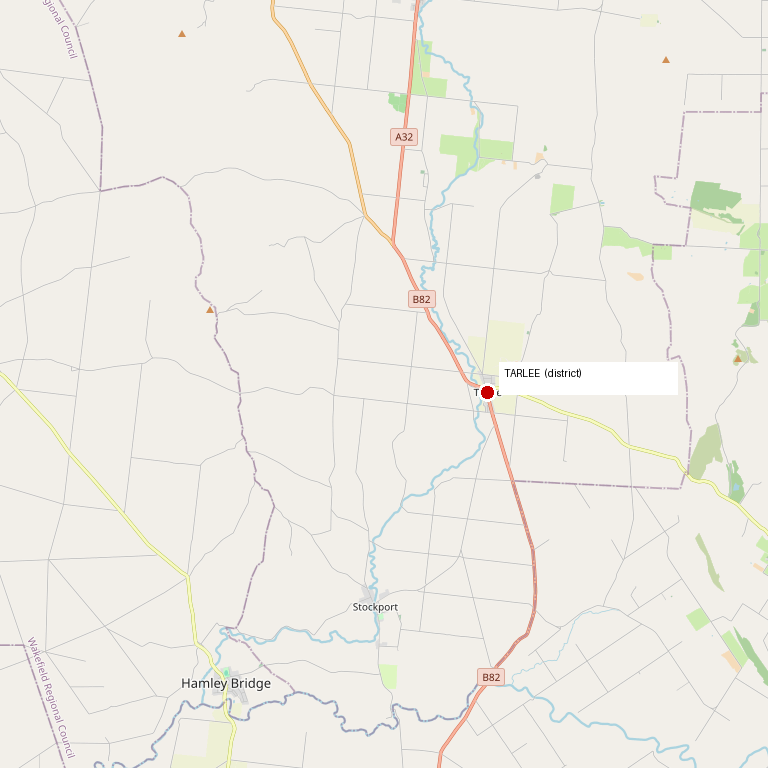
Cliff was a farmer from Tarlee, on the Gilbert River in South Australia's mid-north — the same district his mother's Farrow family came from, and where his parents were married at Hope Farm, Tarlee, on 6 August 1885. The family were in the Tarlee/Finniss country by the 1880s and remained there through the war: it was Tarlee he gave as his address on enlisting, and Tarlee that the Army and the Red Cross wrote to when they wrote to his mother.
How He Died — the eyewitness account
On 25 April 1918, the first day of the Second Battle of Villers-Bretonneux, Cliff was in the line with B Company, 50th Battalion. What happened next is recorded in his own words by a man who was beside him.
The eyewitness: 4874 Private Hurtle Richard Smith, 50th Battalion, B Company — a South Australian who had gone to school with Cliff back home. He gave this statement to the Australian Red Cross:
"He came from Stockport, South Australia. I went to school with him. At Villers-Bretonneux on April 25/18 about 2 a.m., after we had dug in, he was hit on the head and body with pieces of a shell. He was not conscious. Stretcher bearers attended to him and carried him out straight away. I know nothing of his burial."
— Statement of 4874 Pte H. R. Smith, 50th Bn, recorded 13 February 1919
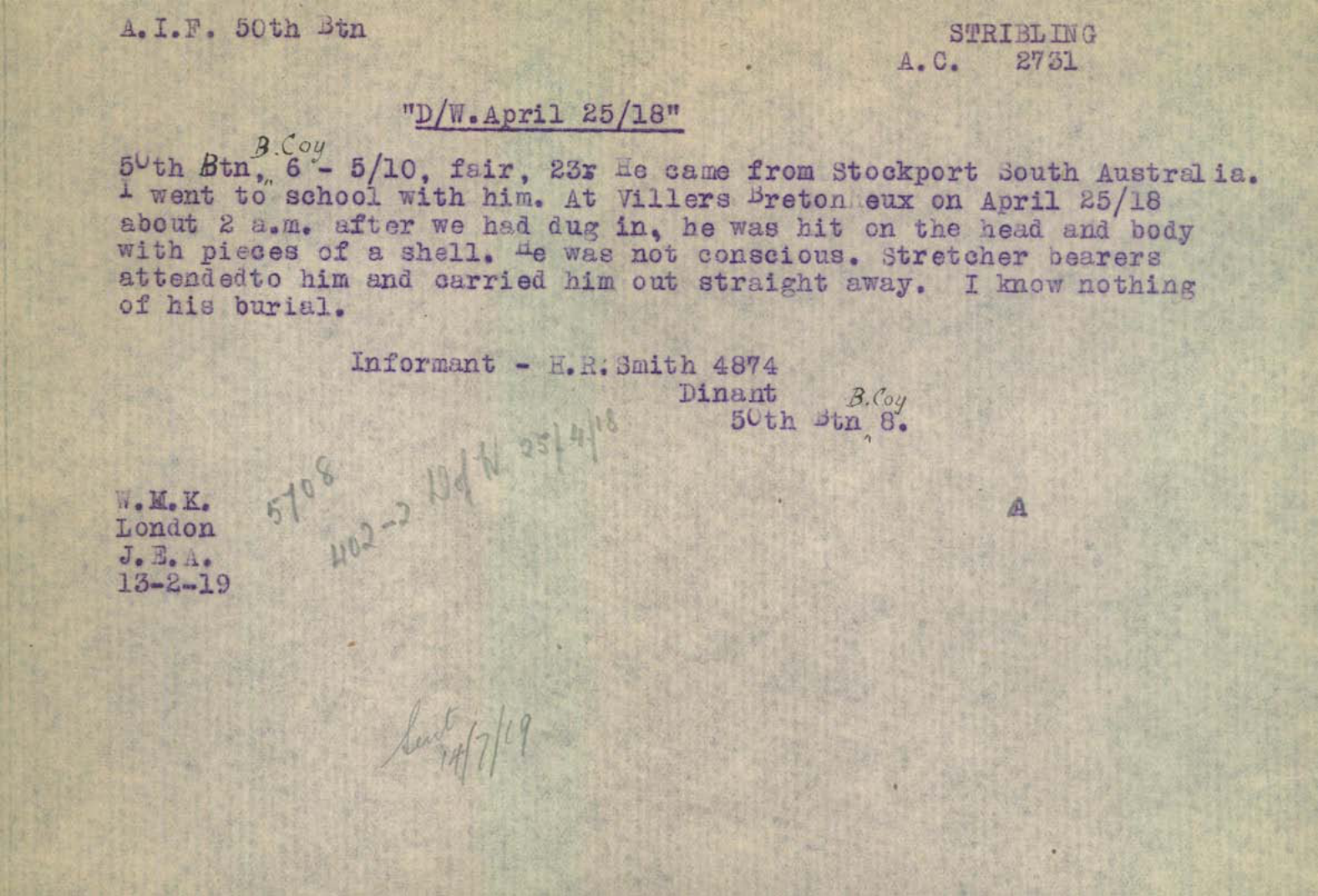
An eyewitness account, written down in a comrade's own hand, of the man he grew up with being killed beside him. That is about as close to the moment as the record ever gets.
What the Battalion's own war diary says about that day
Smith's account does not stand alone. The 50th Battalion's war diary for April 1918 — the unit's official record, written up by its own officers, now held by the Australian War Memorial as AWM4 23/67/22 — describes the same ground and the same hours. Its narrative appendix reads:
"At 1.45 a.m. on 25th April orders were received that the French would attack from HANGARD WOOD to MONUMENT at 5.15 a.m. on 25th April. … At 5.15 a.m. the 50th line attempted to advance but the French had not come up on our right. Heavy hostile Machine Gun fire from MONUMENT WOOD stopped our advance immediately…"
Two hours earlier, the battalion had sent an officer forward to find out what was happening in front — and he was hit before he could finish:
"About 1 a.m. Lieut. J. HILL was sent from Bn H.Qrs to ascertain the situation forward. He reached the Support Line held by the Bn but when half-through with his task was wounded in the face by hostile shell fire. He however completed his reconnaissance and brought the information back to Bn H.Qrs."
That is the same hour, the same line, the same village, and the same cause — shell fire — that Smith described from beside Cliff. By the end of that night the enemy was still shelling: "At 20.30 p.m. enemy heavily shelled VILLERS-BRETONNEUX… At 7.35 p.m. the enemy put down a heavy barrage on our line which lasted for 25 minutes, but no infantry action followed."
The cost, in the battalion's own figures. Its casualty return for the operations of 24 to 27 April 1918 lists 506 killed (40 officers, 466 other ranks), 1,896 wounded and 156 missing — and among the officers killed were Captain Frank Herbert Hancock and the battalion's Medical Officer, Captain Phillip Beauchamp Sewell. Cliff, an other-rank of B Company, is one number inside those totals.
He was buried in the village the battalion itself had marched through. The diary records that on 24 April it went into bivouac in Blangy Wood, just north of Blangy-Tronville, and that after being relieved on 27 April "50th Bn moved to billets in BLANGY-TRONVILLE last parties settling down there by 5.50 a.m. on 28th April." He died of wounds taken at Villers-Bretonneux and lies in the cemetery of the village his unit came back to.
Source: 50th Infantry Battalion war diary, April 1918 — Australian War Memorial, AWM4 23/67/22 (item C1345884; digitised copy RCDIG1007306, 34 pages). Pages transcribed from the digitised scans, 25 September 2026. The scans are OCR-degraded in places; words given here in quotation marks are as read from the pages, and damaged characters are not silently guessed at.
The Red Cross letter to his mother
The Australian Red Cross wrote to Mrs J. M. Stribling, Tarlee, South Australia on 14 July 1919, forwarding Smith's account to her:
"Private Smith states that he used to go to school with your son in Australia, and therefore would know him fairly well. At Villers-Bretonneux on 25th April at about 2 o'clock in the morning, just after they had dug into their positions, your son was struck in the head and body by pieces of shell and rendered unconscious. Stretcher-bearers attended to him and immediately carried him back from the line, but our informant knew nothing further as to his death and burial."
— Australian Red Cross, 14 July 1919, ref. No. 5708
From Lieutenant Spedding's list the Commissioners established that he was buried in the Blangy-Tronville Common Cemetery, 4¼ miles east-south-east of Amiens.
Note on the conflicting accounts. A second report in the same packet gives his height as 6'5½", a fair complexion and age 23 — and places him from Stockport — against the 5'8½", 160 lbs, age 26 on his own attestation paper, which gives his address as Tarlee. The attestation paper is the document he signed himself; it is the one followed here. The discrepancies are the ordinary slippage of a comrade recalling a friend months later, and are recorded rather than smoothed over.
The full packet — nine documents, SRG 76/1/5708 — is held in the vault at `Family History/Records/Stribling/`.
The school in France that bears his name
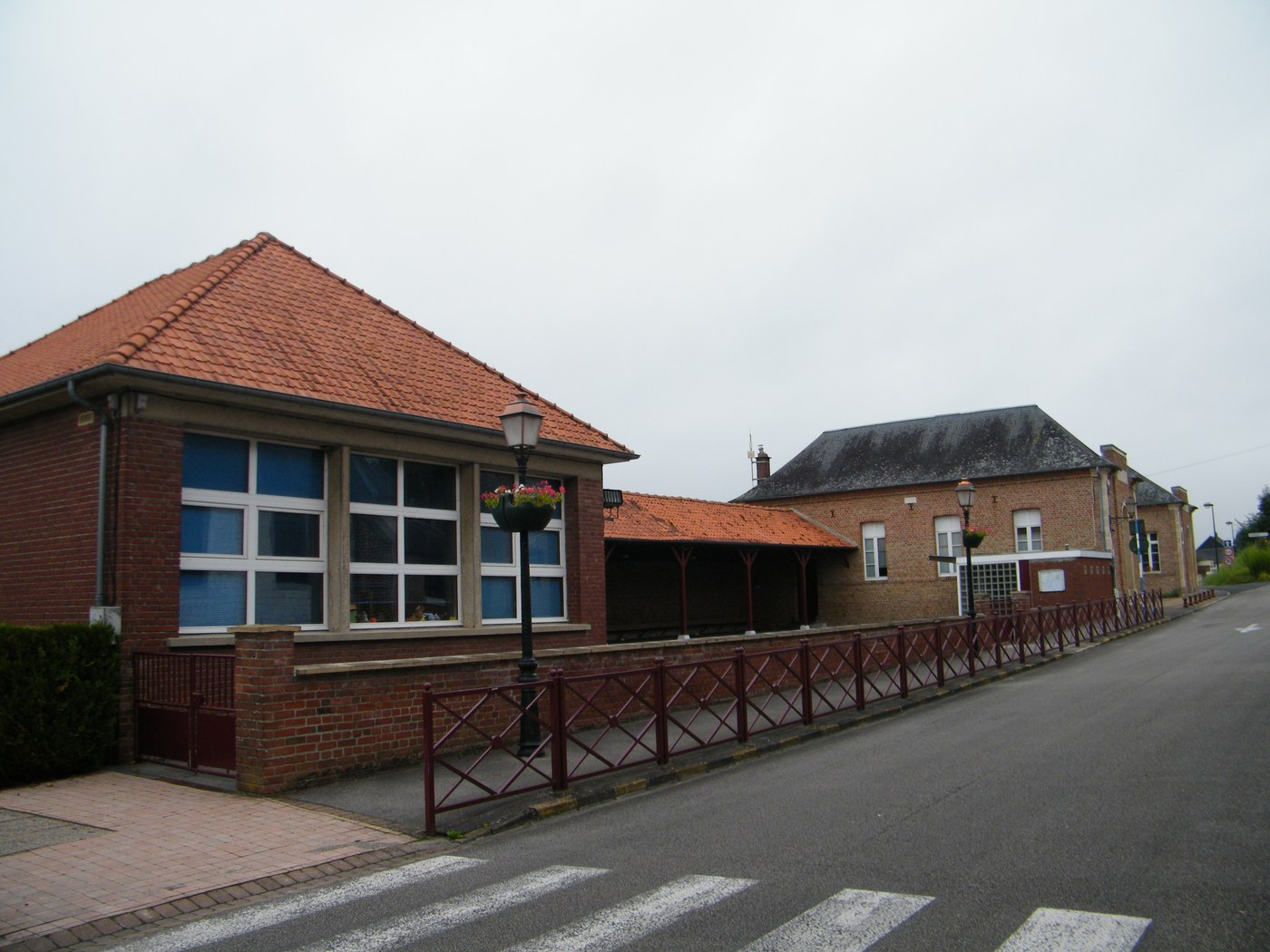
In April 2018, the commune of Blangy-Tronville — the village where he is buried — named its public elementary school in his honour: the École primaire Arthur Clifford Stribling. The building is the village mairie-école in the centre of the commune, town hall and school under one roof.
On the evidence, carefully — two separate things, easily blurred:
Sources for this section: ABC News, "South Australian Digger honoured for his sacrifice in France", 2 April 2018 (which credits its photograph of the school to Wikimedia Commons / APictche); Parliament of Australia, Joint Standing Committee on Foreign Affairs, Defence and Trade report (French town renamed its local school, April 2018); Wikimedia Commons file BLANGY-TRONVILLE (6).JPG.JPG) by APictche, described on Commons as "Bâtiments communaux" (communal buildings), CC BY-SA 4.0, taken 2016 — the image used above was opened and looked at, and the building carries MAIRIE and ECOLE inscriptions, matching the school described by ABC News. The school's official French establishment name and number are École primaire Arthur Clifford Stribling, commune de Blangy-Tronville (SIRET 218 001 022 00027), appearing in the SIRENE company register as recorded at en-ligne.me.
Newspaper References
Two 1918 newspaper notices have been located in the National Library of Australia's Trove archive (fetched and read directly, 25 September 2026):
1. Casualty list — The Advertiser (Adelaide, SA), Thursday 9 May 1918, page 5
Headline: "THE ROLL OF HONOR. — 397th CASUALTY LIST SOUTH AUSTRALIA. Died of Wounds."
"Private A. C. Stribling, son of Mr. and Mrs. A. G. Stribling, Tarlee, died of wounds received in France, on April 26."
Trove: nla.news-article5552386 — page scan `nla.news-page984003`
2. Legal notice — The Register (Adelaide, SA), Thursday 17 October 1918 (Legal Notices column)
"Stribling, Arthur Clifford, late of Tarlee, in the State of South Australia, Private, 50th Battalion, Australian Imperial Forces, formerly Farmer."
Trove: nla.news-article57549026
⚠️ Date discrepancy — recorded, not resolved. The Advertiser printed "on April 26"; every official war record gives 25 April 1918. Trove preserves what the newspaper printed, not what the War Office recorded. 25 April 1918 is treated as correct; the notice's "April 26" is noted here as a contemporary discrepancy (a soldier wounded late on the 25th may have been reported as dying in the small hours of the next day).
OCR note: the Advertiser scan's optical text renders the surname as "5TRIBLING" and "Fiance" for "France" — transcription artefacts of the 1918 newsprint scan, not a different person. The Register legal notice spells the name correctly.
Sources
0b. Imperial War Museum — Lives of the First World War: Private Arthur Clifford Stribling, 587612 — native of Tarlee; died 25 April 1918 — accessed 25 Sep 2026. (Independent of Find a Grave.)
0c. Trove (National Library of Australia) — The Advertiser, 9 May 1918, p.5 (article 5552386) and The Register, 17 Oct 1918, Legal Notices (article 57549026) — accessed 25 Sep 2026.
0c2. 50th Infantry Battalion war diary, April 1918 — Australian War Memorial, AWM4 23/67/22 (item C1345884; digitised copy RCDIG1007306, 34 pages): https://www.awm.gov.au/collection/C1345884 — the battalion's own narrative appendix and casualty return for the operations of 24–27 April 1918, including the 25 April entry and the wounding of Lieut. J. Hill. Scans OCR-transcribed 25 Sep 2026. (Independent of Find a Grave, and independent of the Red Cross packet — a different record, kept by the unit itself.)
0c3. The AIF Project (UNSW Canberra) — Hurtle Richard SMITH — pid 280014 — Regimental number 4874; 50th Battalion; address Stockport, South Australia; returned to Australia 15 June 1919; died 5 September 1962 — accessed 25 Sep 2026. Identifies the Red Cross eyewitness by name. (Independent of Find a Grave.)
0d. Australian Red Cross Wounded and Missing Bureau — packet 5708 (SRG 76/1/5708, State Library of South Australia; digitised by the South Australian Red Cross Information Bureau). Nine documents, 1918–1919: the handwritten eyewitness statement of 4874 Pte H. R. Smith, 50th Bn, B Coy (13 Feb 1919); the Red Cross letter to Mrs J. M. Stribling, Tarlee (14 Jul 1919, ref. No. 5708); the burial report from Lt Spedding's list. Read directly, 25 Sep 2026. Held in the vault at `Family History/Records/Stribling/SRG76_1_5708_RedCross_Stribling_AC.pdf` (SHA-256 `9bd1ea9a…`). (Independent of Find a Grave.)
0e. AWM Red Cross collection: 2731 Private Stribling, Arthur Clifford — C1415934 — accessed 25 Sep 2026.
0f. AWM studio portrait: C1256975 / accession P09291.358 — Studio portrait of 2731 Private (Pte) Arthur Clifford Stribling, 50th Battalion, c. September 1916; copyright expired, public domain; image seen and verified 25 Sep 2026.
Tags
Parents
- Alfred George Stribling (1853 – 1928)
- Jane Murray Farrow (1857 – 1934)
Siblings
- Alma Maud Stribling (1891 – 1987)
- Ella Agnes Stribling (1888 – 1975)
- George Charles Stribling (1898 – 1988)
- Hazel Jean Stribling (1895 – 1983)
- Isa Katie Stribling (1886 – 1973)
- Lindsay Ellis Stribling (1893 – 1979)