Murray John Telfer
Biography
Lifespan: 1924–2009
Role: Ninth child and youngest son of Francis Charles and Amy Telfer; husband of Shirley Edna Parker; father of Daryll William, John Robert, Grantley Keith, Timothy Neil, Kathryn Mavis and Susan Shirley.
Family
Life Summary
Murray was a grazier and farmer on South Australia's Eyre Peninsula — a man of the land whose life spanned the great transition from horse power to mechanisation. He worked horse teams of twelve to fourteen horses, ploughing 30 acres a day with a twenty-row combine. He drove tandem Fordson tractors for extra traction on the hills of Karulga. He cut chaff with a Hornsby oil engine, later a McCormick Deering tractor.
His Christian faith was the defining thread of his life. At an early age he made his commitment to the Lord, remembering a sermon from his father: "let your yes be yes and your no be no." He lived that out faithfully — in business, in family, in every interaction. He served as elder at Ungarra and Tumby Bay Churches of Christ, secretary of Tumby Bay Church of Christ for over 20 years, Sunday School teacher, lay preacher, taught Religious Education at Ungarra and Mt Hill schools, completed a Christian Counselling course, and later became a member of Gideons International placing Bibles in motels and hospitals. He also helped build the Stokes Methodist Church.
A loving son, brother, husband, father, father-in-law, grandfather, great-grandfather, caring friend, counsellor, helper and mentor — his deep trust in God was evidenced in all he did and said. His quiet humour was always to the fore.
Family Stories
Murray was the ninth child of Francis Charles and Amy Telfer, the youngest of the boys. As a small boy he held out his finger to his brother Reg and said "cut it" — and Reg did, with a pair of scissors. He later married Shirley Edna Parker and together they raised four sons — Daryll William, John Robert, Grantley Keith and Timothy Neil — and two daughters, Kathryn Mavis and Susan Shirley. (From the Borders to the Bush, pp.139, 175)
Stories & Memories
Childhood at Ungarra & Saddleworth
The Telfer family arrived at Ungarra in 1904. Murray's father took up scrub land and batched (lived alone as a bachelor) for years before marrying Amy Provis in April 1909. Their equipment was basic: horses, a wagon, and a plough. Sometimes he carted water for soak at Wilkins' property.
From the farm near Saddleworth, the children walked three miles to school regardless of weather. Murray was nearly six when he started — he completed grades 1 and 2 at Saddleworth, then grade 3 back at Ungarra on the new scrub block.
Transport: The family travelled in a Nash Tourer car with a canvas top and side curtains (top speed 25–30 mph / 40–50 km/h). Leaving Saddleworth early, they reached Port Augusta after dark, stayed overnight at a hotel, and continued the next day. The windscreen wiper was operated by a handle inside the car!
Horses — The Heart of Farm Life
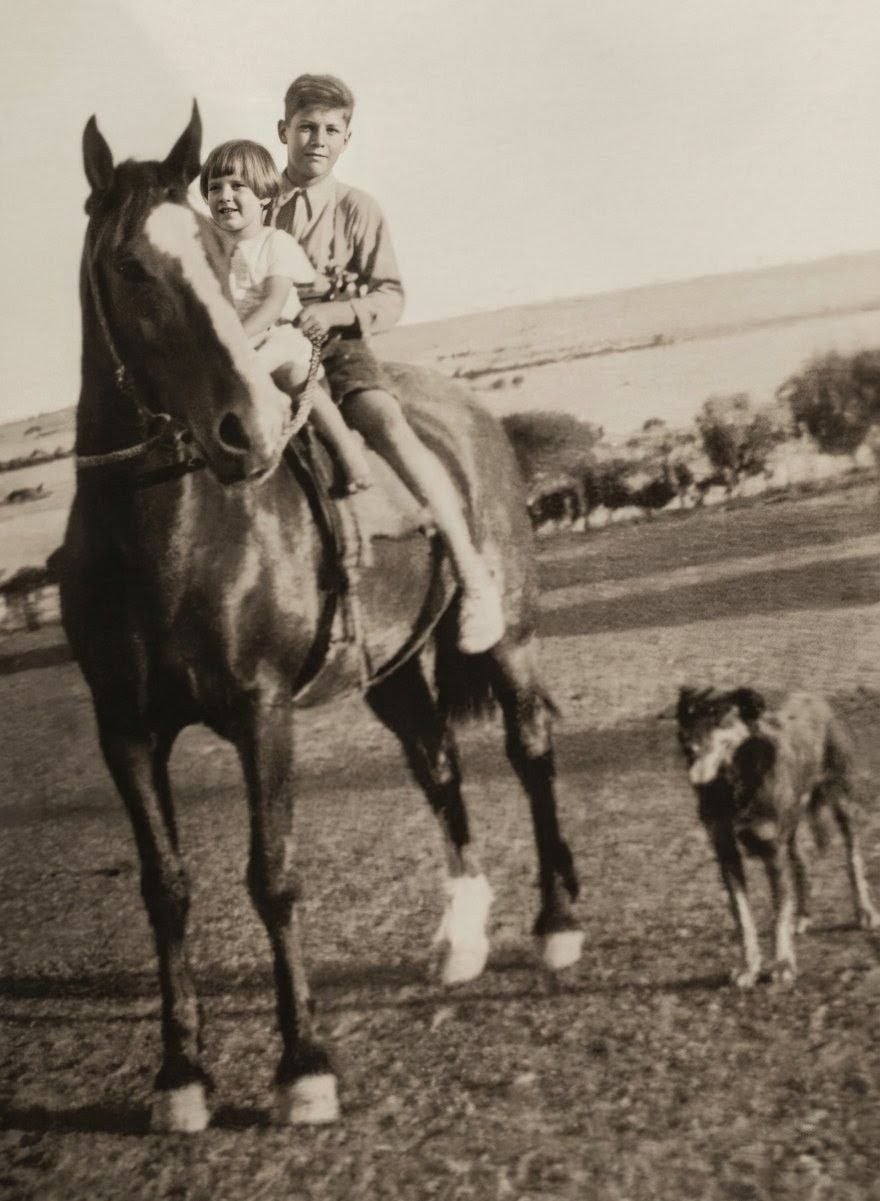
"Horses were a part of everyday life. We had one old pony called Duchess that you could run up behind while it was standing in the yard and leap frog onto its back if you were agile enough, and she wouldn't move."
— Murray & Ruth (aged 6) on Duchess, circa 1936 (photo in gallery)
Daily horse team routine: They were up before breakfast to feed chaff. Each horse was harnessed with its own winkers and collars, coupled in the correct working order — six or seven horses in the front row, the same behind. Long leather reins ran through to the leaders. Nosebags of chaff (half-filled Hessian bags) hung on the harness until they reached the paddock.
Knock-off time: Chains dropped, they walked behind holding the reins. Reversed the harnessing at the shed. Horses went to the dam for a drink — some would roll if they were sweaty. Back to the manger in the straw-roofed stable (walls built of mallee stumps). After tea, hurricane lantern in hand, more chaff. Twenty horses lined up munching — "an era that has passed."
Chaff cutting (once a week): Sheaved hay fed into a chaff cutter driven by a Hornsby oil engine, later by a McCormick Deering 15–30 petrol-kerosene tractor (started on petrol, switched to kerosene once warm).
Horse names (front row): Ranji, [unknown], Lon, Tiger, Clyde, [unknown], Lola — plus Ruby (Murray's riding horse) and Duchess (the family pony).
A Tribute (from the memorial book)
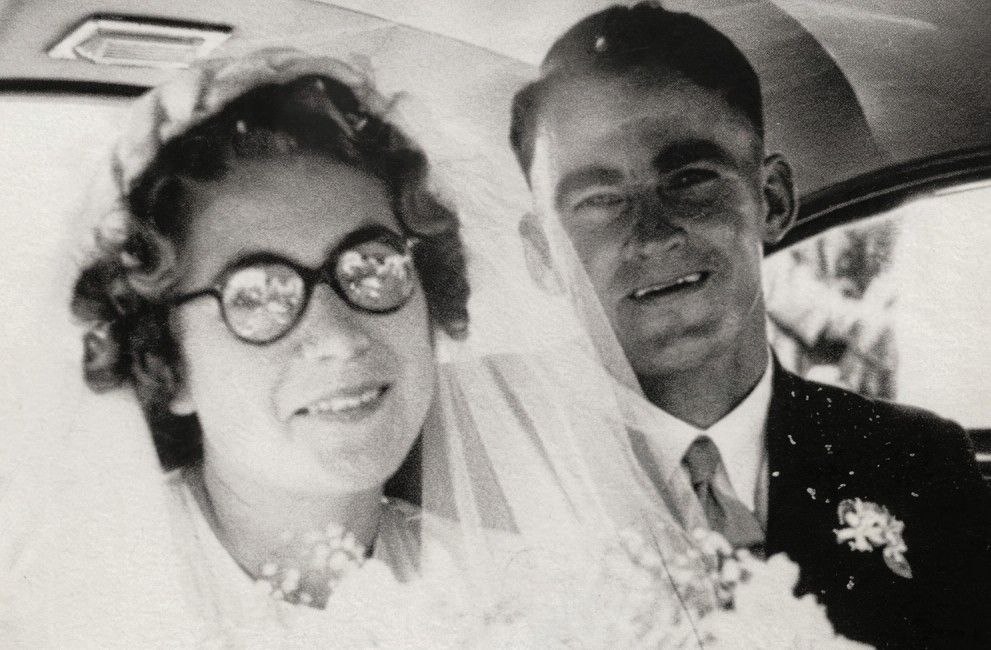
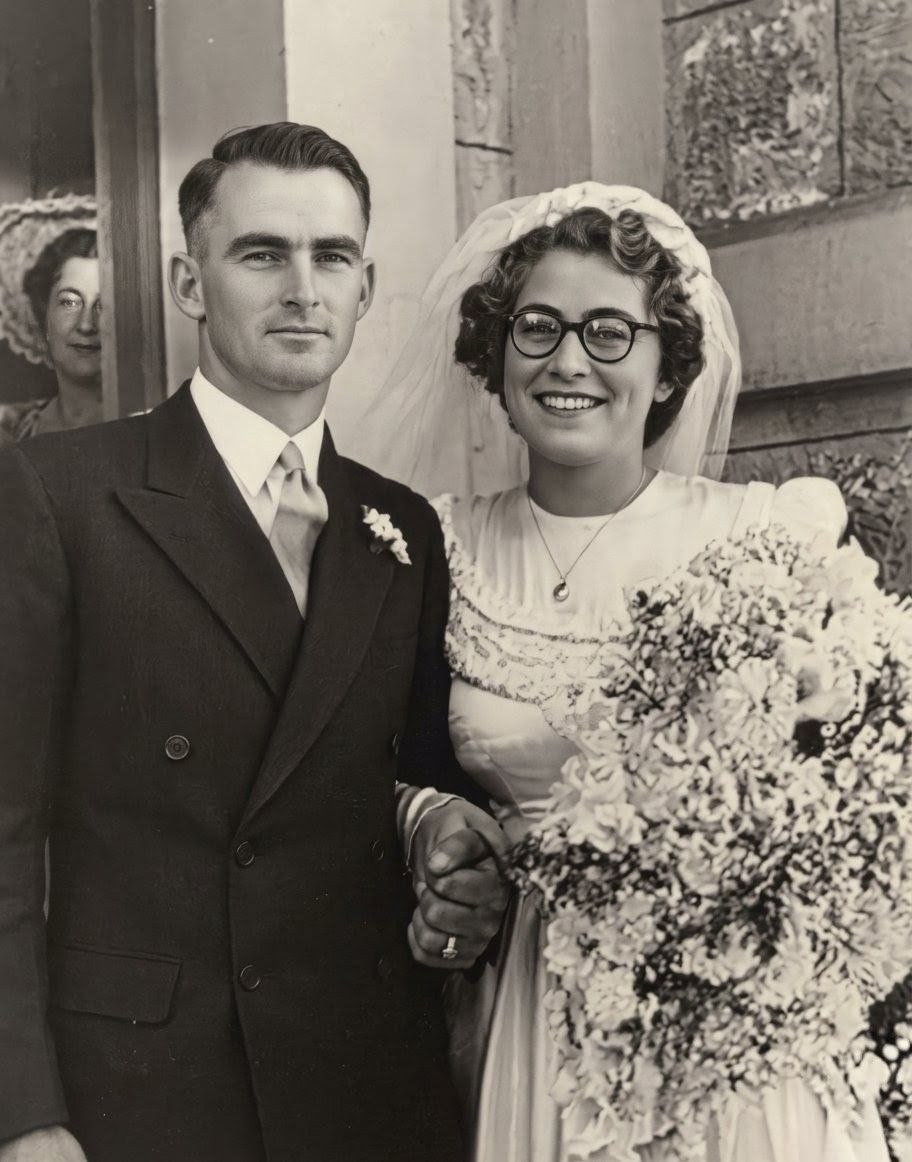
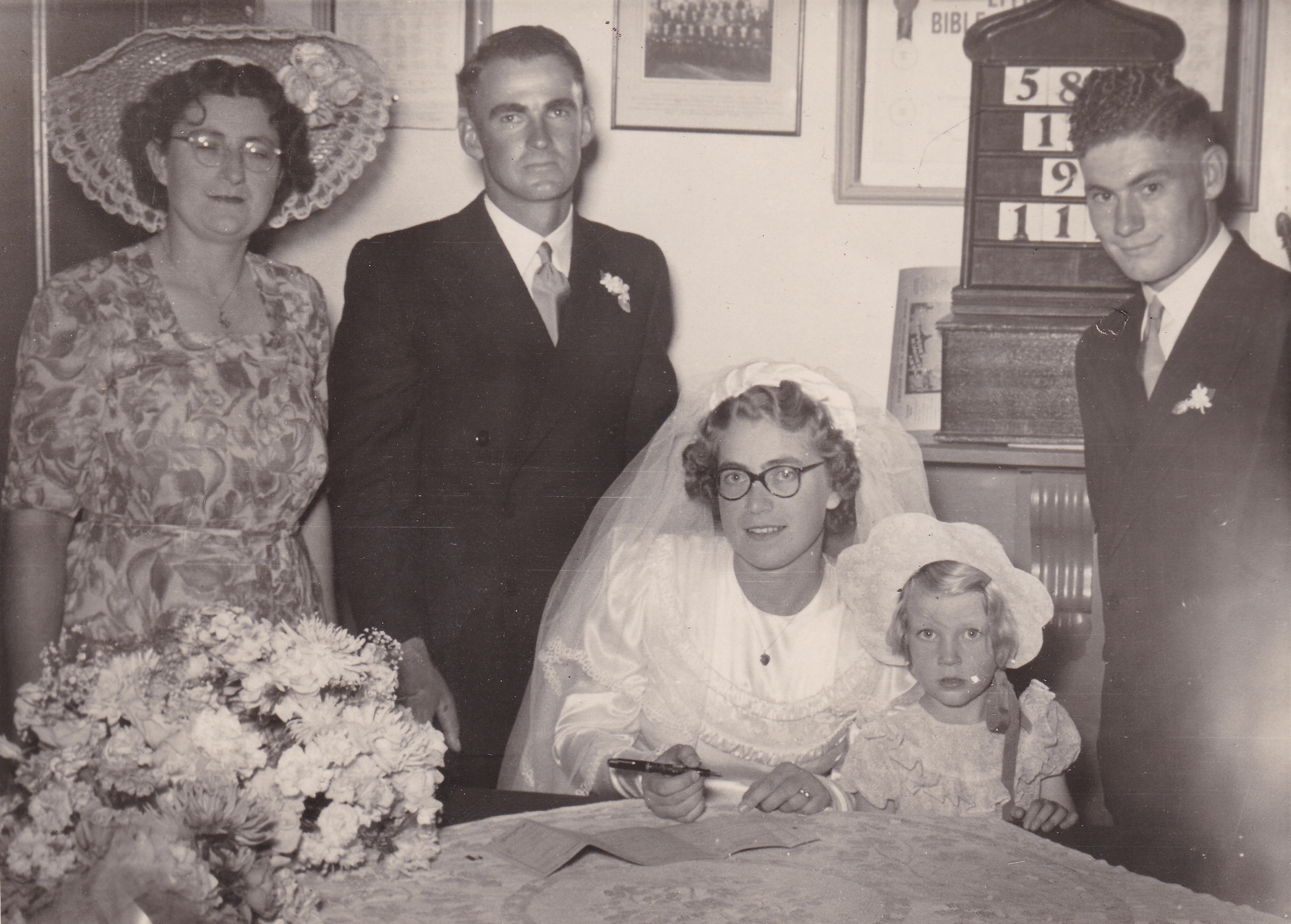
Murray was a man of integrity, humility, and generosity. His word was his bond. He never sought recognition, only to serve. He married Shirley Edna Parker on 18 February 1950 at Prospect Church of Christ — a partnership lasting 59 years.
He served in the RAAF during WWII as a radar mechanic — a role demanding precision and trust. After the war, he managed "Glen Alvie" at Karulga, running sheep and wheat on 2,000 acres. He served as elder at Ungarra and Tumby Bay Churches of Christ, secretary of Tumby Bay Church of Christ for over 20 years, Sunday School superintendent, lay preacher, and taught Religious Education at local schools.
His love of horses never faded — from the great teams of his youth to the pony Duchess that carried his grandchildren. He was a gentle man with a quiet chuckle, always ready with a story.
The Early Years: Horse-Stealing at Military Camp
During military training, Murray and his mates Jack, Stan, and Bob decided to "borrow" a horse from a nearby property. They snuck out after lights out, led the horse back to camp, and hid it in the lines. Next morning the horse was discovered — Murray had injured his neck in the escapade. Stan got chewed out by the Sergeant while Murray tried to look innocent. The horse was returned, but the story became legend among the mates.
The Cows' Tails
Reg and Murray were milking about 10 jersey-cross cows, aged 11–12. One day Murray said, "We ought to tie their tails together." He tied a reef knot in the tail hair. The cows walked side by side, gradually parted, and a tug-of-war ensued — the first joint broke off one tail. They cut off the broken piece and disposed of it. Dad never saw it, or didn't say. That cow had a docked tail that stung like a whip at milking time ever after.
River Swimming Challenge
At the river, the boys would challenge each other to swim across the deep waterhole — a test of courage. Murray, never one to back down, took the challenge. He made it across, emerging with his typical chuckle at the bravado of youth. "We were all mad," he'd say later, shaking his head with that grin.
A Good Scare
Murray and his brother Mantle loved a good prank. One day Murray placed a fake snake on Mantle's path, expecting a laugh. But Mantle spotted it, picked it up, and chased Murray with it — the tables turned! Murray's own trick backfired, and he got the scare of his life. He told this story with a grin: "Mantle got me good that day."
Rabbit Trapping
School holidays meant 30–40 traps set along the creek on Monday afternoon. Thirty to forty rabbits the first night, progressively fewer after that. Saturday: pull the traps, fill the holes. Skins drying by the dozen. Sold for ~1 penny per skin (8–9 pence per pound) — pocket money. The place smelled of rabbits "from one end of the holidays to the other." Mum cooked rabbit that tasted "equal to chicken."
Triumph Motorcycle & the Sidecar
Teen years: Murray bought a second-hand Triumph motorcycle, borrowed £10 from Mum, and paid it back. He fitted a sidecar. Evenings were spent rabbit hunting with a half-whippet, half-greyhound bitch in the sidecar — she'd run them down in the headlight. They chased foxes too, but the foxes turned too sharply. He also rode the motorbike to and from Long Plains courting Shirley.
Sliding Down Culverts
They wore the seats of their pants out sliding down cement culverts between home and school at Saddleworth. A handful of sand helped the slide. Mum was in hospital, with May looking after them. Rather than tell May about the holes in their trousers, they went to school with holey pants — double trouble.
Bed Without Tea
May sent them to bed hungry for misbehaviour. Eddie sneaked out and found cake. May felt sorry and brought food later. "Challenging days for small boys who had to make their own fun (no television or radio). But they were happy days with little thought or care for what lay ahead."
A Message to His Grandchildren (from the memorial book)
"What would you do if you had no electricity, or no running water on tap? Perhaps no telephone. Maybe no car, or truck, or tractor, and you lived 30 or more kilometres from a town where you could get groceries, or see a doctor, or dentist, or chemist. That's what it was like when I was born.
Families were usually large — I was ninth in a family of ten. Mother had Bake Day on Friday — big loaves of bread and trays of buns, us waiting for a hot bun. Never went hungry.
No electricity: wood stove (fire lit every morning — nice in winter, added heat in summer, often in an iron house). Big kettle always on. Wash days: wood-fired copper, scrubbing board (corrugated wood or glass). Hand-ringer or wring by hand. Bath night: Saturday only, big tub in kitchen near stove, same water for all children.
Workshop: forge and anvil. Children worked the bellows. Hammer and chisel. Lighting: kerosene lamps or candles — sometimes read so long the lamp ran out of kerosene (what a smell when the wick burned).
Refrigeration: none until kerosene fridges. The Cool Safe — hessian/cork sides, tray of water on top dripping down to keep sides damp, kept butter from melting. Dad killed a sheep weekly. Salted meat in a wooden wine keg.
Everything was labour intensive. The changes were gradual over many years."
Always Remember (poem from the memorial book)
Always remember the things that are true
The love of the Lord and His love for you
The love of a family that's loyal and kind
The friends that are faithful, the ties that bind
Remember the laughter, the fun and the joy
The memories shared, like a favourite toy
The lessons of life, both bitter and sweet
The strength to go on when the pathway is steep
Remember the horses, the land and the sky
The days that were long, as the years wander by
The faith that sustained through the storm and the calm
The peace that is found in the Saviour's palm
So when you look back on the life that I've known
Remember the seed that was faithfully sown
Not in the things that will rust and decay
But the love that endures, come what may
Family & Community
- 1929 Family Picnic at Christensen Park, Clare — Fran, Walter, May, Bert, Gladys, Albert, Charlie, Sylvia, Doris, Joyce, Melville, Jean; Reg, Hope, Nellie, Beattie, Amy, Murray, Millie, Doug; Ralph, Bill, Eddie, Keith
- Siblings & families: Reg & Elma (50th anniversary), Frank & Merle, Jean & Eric McMurtrie (Murray & Pamela Ruth as attendants), May & Dick Fatchen, Eddie & Lola, Milly & Fred Barton, Les & Gladys Pedler
- Grandchildren: James & Alexa, Kristin & Ben Stefanoff (Nairne SA — music teacher, theatre performer, writer), Nicholas, Jonathan, Andrew, Gerrie, Helen, Rex
- Faith community: Ungarra Church of Christ 75th Anniversary (15 Nov 1986) — Family Day Bag Sewing Competition at Provis Park, Stokes
- 2007: Unveiling the Telfer Memorial Plaque at Pioneer Park, Ungarra — commemorating Telfer settlers
Final Years
Last trip to the farm: 22 April 2009. Special moments in his final weeks. Passed peacefully 1 May 2009. "We thank God for Murray's life and the effect that he had on so many lives. Our lives are so much the richer for him being a part."
Provisional: Buried at Tumby Bay Cemetery, Plot K161 (single source: Find a Grave memorial 240579000) — re-check on the yearly pass.
Eulogy — read at his funeral by his son Grantley Keith Telfer
Written and read by Grantley Keith Telfer at the funeral of his father, May 2009. Reproduced in full, in the author's own words and spelling. The document was found among old family emails by Daryll William Telfer, and forwarded to the family in September 2026.
Murray John Telfer — 24/3/1924 to 1/5/2009
Dad always enjoyed a joke and had a sense of fun. His sense of humour often got him into trouble when he was growing up. Dad related this incident to me one day. He said that he, Ron Harris and Ken Jericho used to wander up to John Smiths shop at Ungarra at lunchtime. Sometimes they would have bananas and things that were getting a bit old and they would give us a few. Jock Ramsey was just a young bloke and hadn't long left school and was serving behind the counter in the shop. I don't know what we said to him but it must have been cheeky and he said, "If you don't get out of here I'll give you a lift under the ear." So I said, "Well, how high would you lift it?" I can still see him jumping over the counter and we took off out the door. He caught up with me, being the one who gave him the cheek, and gave me a cuff on the ear.
Dad was born at Tumby Bay hospital 24 of March 1924 to Charles and Amy Telfer number 9 of 10 surviving children.
His parents, Charles and Amy, moved to a farm at Saddleworth for three years and that is where he went to school for two years from the age of seven. He continued at Ungarra when they returned until he was fourteen. Dad and his brother Reg had to walk to school for a start and later share a bike between them to get to school at Ungarra. When they were around eleven and twelve years old, each evening Dad had to help his brother milk about ten jersey cross cows, and do the separating. The milking was done in the open (no cow shed) and only a hurricane lantern for light. Sometimes they would have some help with this. On Saturday Murray and Reg's regular job was to clean dads boots for Sunday and later on to clean their brother Eddies as well. Then they had to grind the wheat for porridge for the coming week with a small grinder out on the veranda.
In the school holidays they would spend their time trapping rabbits on the cliffs by the creek on the farm and sell the skins for pocket money.
Dad would sometimes talk about the horses that they had on the farm in his younger days, he had a real attachment to the workhorses and found it hard when the time came to put down the last of the team.
In his late teens through to his early thirties dad played some cricket and was wicket keeper for the Ungarra team. He said he wasn't that good with the bat but he enjoyed playing.
In 1948 Dad went to a Church youth camp at Redcliff campsite and met Shirley Parker. This was the beginning of a friendship that was to last for the rest of his days. At that time dad had a triumph motorbike that he used to go and visit his sweetheart at Long Plains. On February 18th 1950 they were married at Prospect, as the Long Plains Church of Christ building had burnt down when a fire went through the area. After a honeymoon on Kangaroo Island they lived in a caravan until they built a house at "Garravale". This was part of the home farm that Murray had continued to work on from the time he left school. Soon children came on the scene, firstly Daryll then John then a while later Grantley then Timothy. After a while Kathryn was born but due to complications at birth only lived for four years. Last but not least of all was Susan who came along to balance out the household of boys
In 1965 Murray and Shirley sold their share of the original farm to his brother Reg and took up land at Stokes. This property was considerable bigger than what he and before but had a lot of stone and partly cleared rough country to finish cleaning up. He took to this with a will and enjoyed the challenge of making a living from the property.
As we were growing up playing junior football dad was involved as a trainer for Eyre United football club for a few years. Even though dad wasn't interested in football he came along to support us. He watched behind the game rather than the play as a trainer to see that the players were OK. Dad was also an Ambulance officer with Tumby Bay brigade from 1968 for about 12 years. He helped man the ambulance at the local shows and other events and assisted with running first aid courses in Tumby Bay.
Dad was a good example to each of us, (his children) and very patient, more than perhaps we deserved. He always treated each of his children and grandchildren fairly and as special to him. Throughout our lives he was always available to talk to and give advise or lend a listening ear, both to his family and others that he came in contact with. As the family spread out and moved away dad and mum prayed daily for each of the family, and they regularly kept in touch by phone and also with visits and assistance wherever they could.
Church was a regular part of dads' life when he was growing up and early on in life he made a commitment to the Lord. He said that one of the sermons he particularly remembered as a child was one his father preached on letting your yes be yes and your no be no. He stuck by that faithfully living out his Christian faith in his life with integrity both in the way he did his business and also in the way he treated his family and other people. He always felt if he did something that compromised his Christian faith the real concern was that he was bringing discredit to his lord and the church.
Dad believed it was important to tell others about what they were missing out on and so he became a member of the Gideon's who give out bibles and place bibles in motels, hospitals etc. Dad did a Christian counselling course and was involved over the years as a Sunday school teacher, lay preacher, elder at Ungarra and Tumby Bay Churches of Christ, he taught R.E. at Ungarra and Mt Hill schools for a number of years and was the secretary of Tumby Bay c of c. for over 20 years.
When dad and mum moved to Tumby Bay in 1983 it wasn't long before he was asked to play bowls but he wasn't interested in that, his hobby was the farm. Besides as he said he wasn't old enough to play bowls. You couldn't have said he retired to Tumby Bay because he continued to show a keen interest and to participate in the farm. As he became less active and unable to come out so often he would always be interested in what was happening and particularly would always want to know how much rain we had measured.
Dad continued throughout his life to enjoy a joke or a play on words, and when he told tell them he would get a real twinkle in his eye. The family enjoyed these even if we had heard the stories or jokes numerous times before.
When in later years he would be out at the farm and his grandsons would be driving he would say "Home James and do spare the horses." He enjoyed telling stories and when he lived in Tumby and came out to the farm he would often tells stories over a cup of tea of when he was young or other anecdotes that he remembered. A quote that dad used on several occasions was one from Adam Lindsay Gordon "Life is mostly froth and bubble, two things stand like stone, kindness in another's trouble and courage in your own" He felt that this summarized how things in life should be dealt with when life problems came along.
Over the last few days a number of people have rung to share their condolences and express how much dad meant to them. Some of the things people have shared are that they found dad to be the epitome of what they felt a Christian should be. A number of people mentioned how he had mentored and help them through some important times in their life, some through physical needs and others with their spiritual needs.
Others have said of dad that he was a good listener and easy person to talk to, understanding and prepared to listen to your point of view, even if he didn't necessarily agree with it.
From his 80th year Dad's health deteriorated gradually until 18 months ago when he was diagnosed with cancer. It was a trying time for him who had enjoyed good health most of his life. In his last days he was at peace knowing he would spend eternity with his Lord who he faithfully served during his life.
Source: Eulogy for Murray John Telfer, written and read by his son Grantley Keith Telfer, May 2009. Received by Mark Telfer via Daryll William Telfer, September 2026. Full document on file: `Family History/Documents/Eulogy - Murray John Telfer (2009).doc`. Mark Telfer was present at the funeral and has ruled this account verified (21 Sep 2026).
Timeline
| Date | Event |
|---|---|
| 24 Mar 1924 | Born, Tumby Bay, South Australia |
| ~1926 | Family moved briefly to Clare (fruit block) |
| 1933 | Moved back to Ungarra |
| 1930s | Farm life at Ungarra & Saddleworth; school 3 miles walk |
| ~1936 | Photo on Duchess the horse with sister Ruth (aged 6) |
| 1940s | Teen years: horse teams, rabbit trapping, Triumph motorcycle; military service |
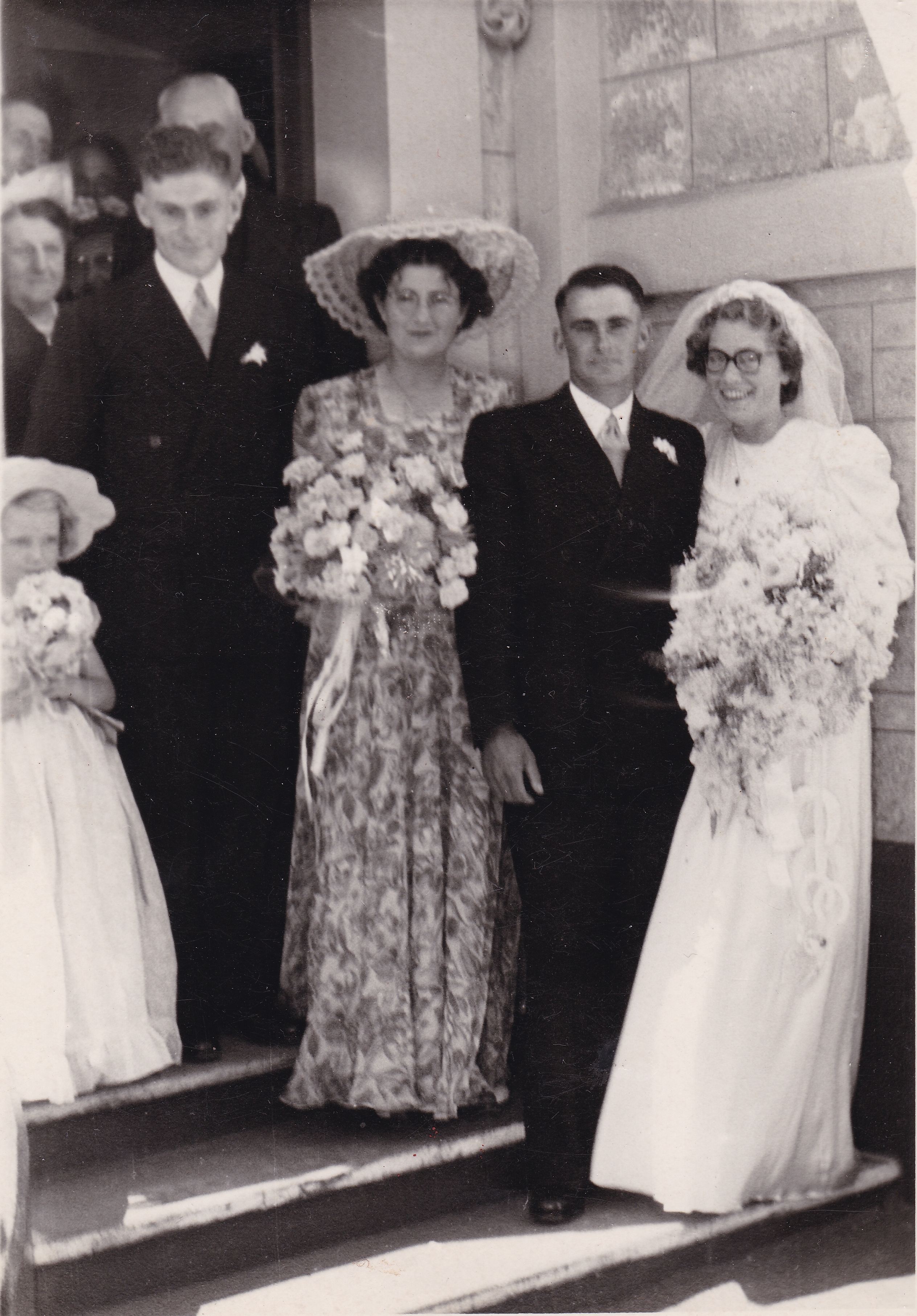
| 18 Feb 1950 | Married Shirley Edna Parker at Prospect Church of Christ (wedding photos in gallery) |
| 1950s-60s | Grazier at Garravale, Karulga — horse teams, Fordson tractors |
| 1964 | Last crop at Garravale |
| 1970s-80s | Active in Church of Christ: Elder, Secretary (20+ yrs), Sunday School, RE teacher |
| 29 May 1980 | Declared duly elected Councillor for Tantanoola ward, District Council of Millicent — term to expire the 1st Saturday of July 1982 (SA Government Gazette) |
| 1980s-90s | Gideons International member |
| 15 Nov 1986 | Ungarra Church of Christ 75th Anniversary — Family Day |
| 1999 | Shearing ewes with Steve Rogers at wool classing table |
| 2007 | Telfer Memorial Plaque unveiled, Pioneer Park, Ungarra |
| 22 Apr 2009 | Last trip to the farm |
| 1 May 2009 | Passed away peacefully, aged 85 |
| ±9 May 2009 | Buried at Tumby Bay Cemetery, Plot K161 (Tumby Bay, District Council of Tumby Bay, SA) — single source (headstone memorial); not yet cross-confirmed |
Sources
- Primary: Celebrating the life of Murray John Telfer — 24 March 1924 – 1 May 2009 (family memorial book, compiled with photos & memories from Daryl, Grantley, Auntie Pam, Shirley). Full commemorative book archived in the vault: Celebrating the life of Murray John Telfer - 24th March 1924 - 1st May 2009.pdf
- Oral History: "Murray's Memories" as told to son Grantley Keith Telfer
- Eulogy: Eulogy for Murray John Telfer, written and read by his son Grantley Keith Telfer at his funeral, May 2009 — received via Daryll William Telfer, September 2026. Full text above; document on file at `Family History/Documents/Eulogy - Murray John Telfer (2009).doc`. Verified by Mark Telfer (21 Sep 2026), who was present at the funeral.
- Wikipedia-style note: The rich biography is preserved from the earlier family record; see the memorial note Celebrating the life of Murray John Telfer for the fuller account.
- Government record — SA Gazette: The South Australian Government Gazette, 29 May 1980, p.1458 — "DISTRICT COUNCIL OF MILLICENT, Supplementary Election… Murray John Telfer was declared duly elected to the office of Councillor for Tantanoola ward for a term of 2 years, such a term to expire on the 1st Saturday of July, 1982. Dated 23rd day of May, 1980. M. J. Hurley, Returning Officer." — classic.austlii.edu.au/au/other/sa_gazette/1980/23/1458.pdf — accessed 14 Oct 2026. (Read verbatim under verification.)
- WikiTree: Murray John Telfer (1924–2009) — confirms birth location Tumby Bay, SA
- Headstone memorial — Find a Grave: Murray John Telfer (1924–2009) — Memorial ID 240579000. Confirms dates 24 Mar 1924 – 1 May 2009; burial Tumby Bay Cemetery, Plot K161, District Council of Tumby Bay, SA; parents Francis Charles Telfer (1875–1954) & Amy Ellen Provis Telfer (1884–1951); spouse Shirley Edna Parker Telfer (1929–2017, m. 1950). — accessed 15 Oct 2026. (Resolved under verification. Single source group for the burial plot; parents & spouse already confirmed from primary sources above.)
- Geni: Francis Charles Telfer (1875–1954) — confirms Murray as son of Francis Charles
- WikiTree: Amy Ellen (Provis) Telfer (1884–1951) — confirms Murray's mother's identity
Tags
Spouse
- Shirley Edna Telfer (1929 – 2017)
Parents
- Amy Ellen Telfer (1884 – 1951)
- Francis Charles Telfer (1875 – 1954)
Children
- Daryll William Telfer (1951 – living)
- Grantley Keith Telfer (1957 – living)
- John Robert Telfer (1952 – living)
- Kathryn Mavis Telfer (1961 – 1965)
- Susan Shirley Lawrie (1967 – living)
- Timothy Neil Telfer (1959 – living)
Siblings
- Clarice May Telfer (1911 – 1997)
- Doris Elma Telfer (1919 – 1993)
- Edwin Roy Telfer (1921 – 2009)
- Emily Amelia Telfer (1913 – 2000)
- Ethel Jean Telfer (1915 – 2004)
- Francis Kelson Telfer (1910 – 1987)
- Gladys Merle Telfer (1917 – living)
- Reginald Masters Telfer (1922 – 2011)
- Ruth Telfer (1931 – living)