John Telfer
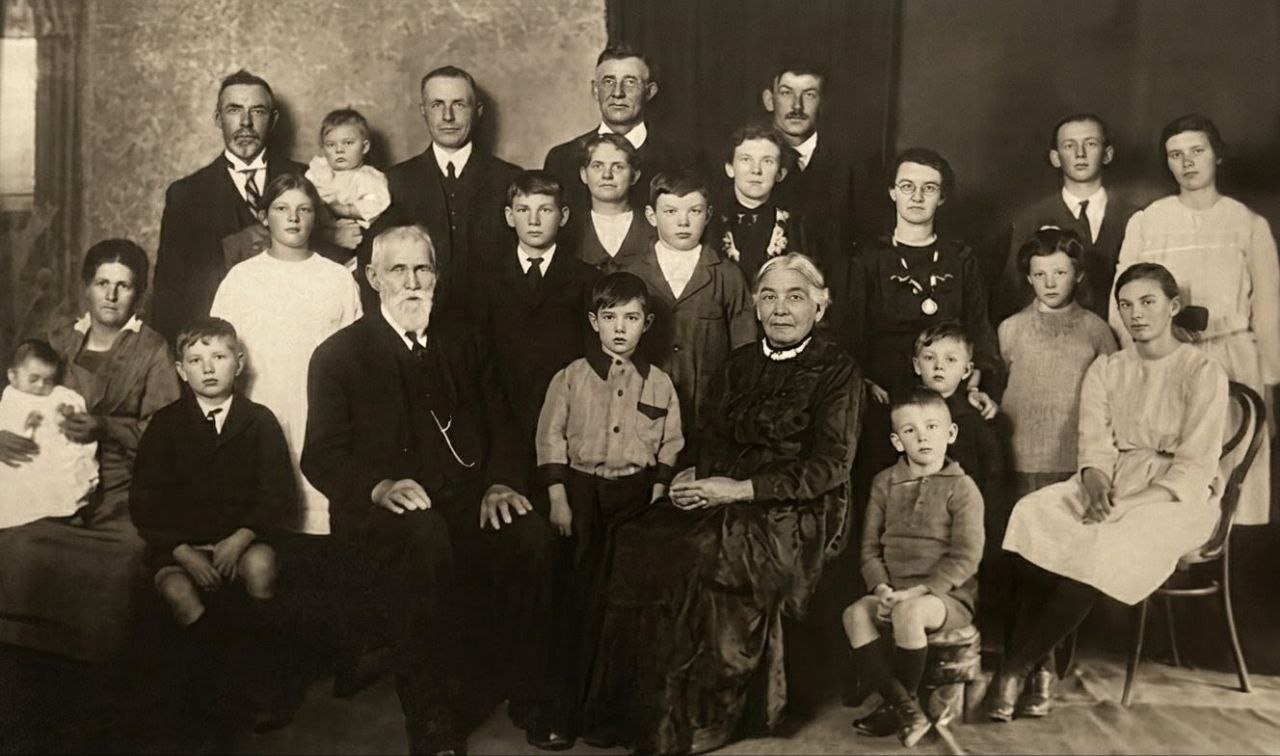
Biography
Role: Son of the Scottish immigrant Francis Telfer
Born: 28 May 1847 — Adelaide, South Australia
Died: 23 August 1929 (aged 82) — Clare, South Australia
Buried: Clare Cemetery, Clare, South Australia
Occupation: Farmer — 47 years at Willow Plains
Residence: Willow Plains (near Clare), South Australia
Grandson: Murray John Telfer (1924–2009)
Great-grandson: Timothy Neil Telfer (1959–?)
Family Stories
The Horse-Drawn Van and the School Mistress
John Telfer was born in Adelaide on 28 May 1847, the eldest surviving son of Scottish immigrant Francis Telfer and his third wife Margaret Wright. He grew up at Chain of Ponds and Kersbrook in the Adelaide Hills, learning to farm from his father.
As a young man, John didn't just sell fruit and veg locally — he loaded his horse-drawn van and made regular runs to Kadina and beyond, peddling produce to the miners and settlers up north. It was on one of these trips that his uncle decided John needed a wife. The uncle told him to call at Tarlee school next time he was passing and make the acquaintance of the school mistress, Miss Caroline Amelia Masters. John took the advice — and kept going back.
Caroline wasn't just any school marm. She'd started a school at Gilberton, then when the railway bypassed the hotel by two miles, Tarlee sprang up at the rail head and she moved there. By 1870 she was teaching 41 pupils in the Baptist Church. She resigned on 17 August 1874 to marry John.
On the marriage certificate she signed as C.A. Masters — she later dropped the "A" because she didn't want her initials to be C.A.T. Telfer.
Willow Plains and the One-Room Hut
When the government cancelled grazing leases in the north and cut the land into small farming blocks, Caroline urged John to apply. He was allotted two sections in the Hundred of Arkaba. In March 1878 he set out by wagon with a camp oven, billy can, water bags, blankets, horse feed, seed wheat and farm tools. He built a one-roomed wood and iron hut with a stone chimney, then went back for his family.
Caroline and the three children travelled later by spring dray — a three-month-pregnant mother on a long, jolting journey. The hut had a hessian partition dividing bedroom from living quarters. Minimum furniture. This was home.
Their son Ernest John was born in that hut on 2 September 1878 — the first white baby born at Willow Plains. The midwife scolded Caroline for opening a window for air: "You wicked woman! Are you trying to kill that poor little baby by giving it a chill?"
Water and the Angle Farm
John's first problem was water — the nearest well was five miles away. He dug a first well — a failure. The second struck good supply at about 50 feet, and from that moment the farm began to establish itself. A permanent stone house was begun and practically completed by 1893 — still in use today.
The property was called Angle Farm because the boundaries formed all sorts of odd shapes — a triangle with a square attached.
The Double Bereavement
John and Caroline farmed at Willow Plains for 47 years. They raised six sons and adopted two children whose mother had died. In a remarkable turn, John died on 23 August 1929 at age 82, and Caroline followed him the next day. The Register News-Pictorial ran a photo: "THE LATE MRS. JOHN TELFER, of Clare, who died within a few hours of her husband. Both were prominent Clare residents."
They were buried together at Clare Cemetery.
(From the Borders to the Bush, pp.109-118; Trove newspaper archives)
Family
| Relation | Name |
|---|---|
| Mother | Margaret Wright Telfer (1810–1892) |
| Father | Francis Telfer (1809–1895) |
| Spouse | Caroline Amelia Telfer (1842–1929) (née Masters, m. 22 Sep 1874) |
| Children | Francis Charles Telfer (1875–1954), Ernest John Telfer, William James Telfer, Albert George Telfer, Walter William Telfer, Edwin Gilbert Telfer |
| Siblings | George Wright Telfer, Margaret Dougal Telfer |
| Half-siblings | James Telfer, Esther Smith, Elizabeth Farrow, Jane Telfer |
Life Story
John Telfer was born in Adelaide, South Australia on 28 May 1847 — the eldest surviving son of Scottish immigrant Francis Telfer and his third wife Margaret Wright. He grew up on the family farm at Chain of Ponds and Kersbrook in the Adelaide Hills.
On 22 September 1874, he married Caroline Amelia Masters at the Baptist Chapel, Tarlee. The marriage was announced in the South Australian Register. Caroline had immigrated from England as a young child with her family aboard the Templar in 1845.
John and Caroline settled at Willow Plains, near Clare, where they farmed for 47 years. They raised six sons:
John was described as a prominent Clare resident and was actively associated with every community move in the Willow Plains district. He was a prominent member of the Methodist Church, serving as superintendent of the Sunday-school for about 30 years (per both Advertiser and Chronicle obituaries).
The Double Bereavement — 1929
In a remarkable and tragic turn, John and Caroline died within hours of each other in August 1929. John passed away on 23 August 1929 at age 82, and Caroline followed him the next day, 24 August 1929. The Register News-Pictorial ran a photo with the headline:
"THE LATE MRS. JOHN TELFER, of Clare, who died within a few hours of her husband. Both were prominent Clare residents."
They were buried together at Clare Cemetery.
As the Advertiser obituary noted:
"He was a resident of Willow Plains for 47 years. He was actively associated with every movement inaugurated for the wellbeing of the district, and was a prominent member of the Methodist Church and Sunday-school. Mr. Telfer held the position of superintendent of the Sunday-school for about 30 years."
Timeline
| Date | Event |
|---|---|
| 28 May 1847 | Born — Adelaide, SA |
| ~1850s–60s | Grew up at Chain of Ponds / Kersbrook |
| 22 Sep 1874 | Married Caroline Amelia Masters at Baptist Chapel, Tarlee |
| 25 Nov 1875 | Son Francis Charles Telfer (1875–1954) born at Kersbrook |
| 1878–1887 | Five more sons born (Hawker, Arkaba) |
| ~1882–1929 | Farmed at Willow Plains, Clare (47 years) |
| 23 Aug 1929 | Died at Clare, SA (aged 82) |
| 24 Aug 1929 | Wife Caroline died within hours of John |
| 25 Aug 1929 | Buried at Clare Cemetery |
Sources
The Horse-Drawn Van to Kadina
Born 24th May 1847, John spent his early years helping his father Francis grow and sell fruit and vegetables. They didn't just depend on the local market — John, in his horse-drawn van, made regular trips to Kadina and beyond to peddle their home-grown produce to the miners and settlers up north.
The Uncle's Matchmaking
In the early 1870s, one of John's uncles decided it was time the young man settled down. He suggested John should call at Tarlee school next time he was travelling through, and make the acquaintance of the school mistress, Miss Caroline Amelia Masters. Being a dutiful nephew, John took the advice — and seemed to like what he saw, because he kept going back.
Caroline the Teacher
Caroline Masters was no ordinary school marm. She first tried opening a school at Gilberton with her sister, near the Forrester's Arms Hotel — a staging camp for bullockies hauling goods to and from Adelaide. When the railway bypassed the hotel by two miles and the town of Tarlee sprang up at the rail head, the school failed.
In 1870 she tried again, this time granted a licence by the Tarlee District Council. She started teaching in the original section of the Baptist Church with 41 pupils — 18 boys and 23 girls. The Tarlee school history says she showed "dedication and persistence that would do a present day teacher proud." She taught there until 17th August 1874, when she resigned to marry John.
The C.A.T. Problem
On the marriage certificate Caroline signed as C.A. Masters. In later years she removed the A from Amelia because she was not keen on her initials being C.A.T. Telfer. From then on she was simply C.M. Telfer.
On the Death of Little John Ernest
John and Caroline's second son, John Ernest, was born 1st March 1877 and lived only six months, dying of pneumonia on 20th September. Caroline wrote a heart-wrenching poem that included these lines:
"Safe in the arms of Jesus,
Safe on His gentle breast —
But my arms are empty, my heart is sad,
And my spirit cannot rest."
"Not much to lose a baby,
The unknowing world may say;
May they never know what my heart has known,
Nor feel what I feel today."
The Adopted Children
Before leaving Kersbrook, John and Caroline offered to care for two children — a girl about three and her brother, several years older. Their mother had died and their father, a Swiss immigrant, didn't know how to care for four children. Legal adoption wasn't available in South Australia at that time, but John and Caroline assumed full responsibility. The little girl was Bertha, henceforth always known as Bertha Telfer. She became a beloved sister to the boys.
The Move to Willow Plains
When the SA Government decided to cancel grazing leases in the Northern Districts and cut the land into small farming blocks, Caroline urged John to apply. After interviews he was allotted two sections in the Hundred of Arkaba. He travelled north, built a small one-roomed wood and iron hut with a stone chimney, then returned to Kersbrook.
In March 1878 he set out again by wagon with all the conveniences of the day: camp oven, billy can, water bags, blankets, horse feed, seed wheat and farm tools. He spent the night at Palmers Creek, about 15 miles from his new home, where a Mr Will Sweet and his brother Arthur were camped with their bullock teams. Next morning Sweet recalled being woken by the sound of a shovel — John was digging two trenches through deep sand for his wagon wheels. Sweet told him not to bother — they pulled him across with the bullocks.
Caroline and the three children travelled later by spring dray, likely driven by John's brother George. A three-month-pregnant mother with three children on a long, slow, jolting journey.
They settled into the one-roomed hut with a hessian partition dividing bedroom from living quarters, minimum furniture and equipment — and this became home.
Ernest John — First White Baby at Willow Plains
On 2nd September 1878, five months after arriving, little Ernest John was born in that hut. A local mid-wife attended. At one stage, while the mid-wife was out of the room, Caroline felt distressed and opened the small window to get fresh air. The mid-wife came storming back: "You wicked woman! Are you trying to kill that poor little baby by giving it a chill?" and very decisively shut the window. The child survived and made history as the first white baby born at Willow Plains.
Digging for Water
With no permanent springs, John's first problem was water. The nearest well was five miles away. He dug a first well under the fence between his and George's blocks — a failure. The second, near the centre of Section 72E, struck a good supply at about 50 feet. From that moment the farm began to establish itself around the water supply. A permanent stone house was begun, added to as finances allowed, and virtually completed in its basic form by 1893. The house is still in use today.
Angle Farm
When asked why John and Caroline called their property Angle Farm, a glance at the land boundaries explains it — John owned a sort of triangle with a square attached, and even including George's blocks, the boundary contained all sorts of angles.
Caroline's Brick Oven
Caroline was not keen on iron stoves for baking. She had a brick oven built onto her kitchen — the oven itself outside, but the door opening into the kitchen. About five feet square, half-filled with dirt and stones, then a layer of bricks leaving a two-foot-high oven. She'd build a hot fire while the bread was rising, scrape out the coals and ashes, place in the bread, and wait. It baked beautifully. Cakes, biscuits, pies and tarts the same way.
Cocky the Wonder Bird
The family had a pet cockatoo who was famously talkative — so important a member of the household that Caroline wrote a poem about him:
Our Cocky is a wonderous bird,
Well worthy of a ditty;
And were his name unknown to fame,
'Twere certainly a pity.
When the boys overslept, Cocky called them by name — "Albert! Ernest! Charley!" When horses came home from work he called "Whoa!" When strangers called he'd ask "You're going to the Band of Hope?" And when the children came home from school he'd rattle off "Walter! Eddie! Eddie! Walter!" until they came rushing in.
(From the Borders to the Bush, pp.109-118)
Tags
Spouses
- Ann Taylor (1856 – ?)
- Caroline Amelia Telfer (1842 – 1929)
Parents
- Francis Telfer (1809 – 1895)
- Margaret Wright Telfer (1810 – 1892)
Children
- Albert George Telfer (1881 – 1970)
- Bertha Telfer (? – ?)
- Edwin Telfer (1887 – 1958)
- Ernest Telfer (1878 – 1953)
- Francis Charles Telfer (1875 – 1954)
- John Telfer (1877 – 1877)
- Walter Telfer (1884 – 1966)
- William James Telfer (1880 – 1880)
Siblings
- George Telfer (1850 – 1913)
- Margaret Dougal Telfer (1849 – 1936)