John Charles Dillon
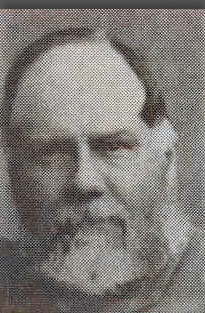
Biography
Lifespan: 1827–1906
Branch: Other
Relationships
| Relation | Name |
|---|---|
| Father | John Boswell Dillon |
| Spouse | Elizabeth Beattie Telfer (1832–1896) |
| Son | James Telfer Dillon (1861–1951) |
Family Stories
John Charles Dillon married Elizabeth Beattie Telfer on 18th December 1856. The wedding took place in the home of Elizabeth's uncle, Francis Telfer, at "Macoota" — Section 6146, Chain of Ponds in the Hundred of Para Wirra. John's occupation was listed as "Stock-keeper" and his residence as "Wall — Hundred of Murray". The witnesses were Elizabeth's brothers James and Robert Telfer, and the officiating minister was William Vercoe.
John was the son of John Boswell Dillon, who was a descendant of Viscount Dillon of Ireland. Early in their married life, John and Elizabeth had a property on the Yorke Peninsula, later moved to Tea Tree Gully, and eventually settled at Millbrook.
John was also a trustee of the Church of Christ at Chain of Ponds (the Kersbrook area), listed alongside Francis Telfer on the 1862 land transfer deed from Thomas Scott.
The book also carries these family stories about Elizabeth and John, retold from the family recollections in From the Borders to the Bush (pp. 214–219):
Coming out to South Australia. Elizabeth Telfer sailed for South Australia in 1854 on the Oliver Lang with her brothers James and Robert. From the port they travelled overland to their uncle Francis Telfer at Macoota, Kersbrook, and it was there that she married John Charles Dillon on 18 December 1856. John was a stock-keeper at the time.
The wild Irish woman. When neighbours fell ill, Elizabeth would saddle up and gallop down Millbrook's main street to lend a hand. One unkind soul took to calling her "that wild Irish woman" — a remark that was quickly silenced once it was pointed out that she was Scottish, not Irish.
The Sunday School chase. While the family was living at Tea Tree Gully, Elizabeth's boys skipped Sunday School to play in the creek. John gave chase along the bank, unbuckling his belt as he ran — forgetting that his pants would fall down when he did. They did, and the boys escaped that day unharmed.
Church and school. John was one of twelve trustees who bought allotment No. 4 in the Maidstone township so that a chapel could be built. He insisted his boys attend Sunday School and church. At one point the entire Millbrook School enrolment consisted of Dillon children. The school later burned down.
The Millbrook Reservoir. Around 1920, the land of the Dillon orchard and that of many neighbours was resumed for the building of the Millbrook Reservoir. The house stood just short of the flood zone, yet it was demolished anyway. White lilies from the garden lived on, flowering for decades after the house was gone.
The rosemary miracle. In a later drought, the dry reservoir bed let descendants walk into the ruins of the old home. One descendant found two rosemary bushes growing by the back door — plants she had put in years before. She brought them home and replanted them; one survived for a long time.
(From the Borders to the Bush, pp. 29, 214; family stories pp. 214–219)
Note: Much of the narrative about John and Elizabeth's life together is told through Elizabeth's story.
Life Summary
John Charles Dillon was born in Dublin, Ireland around 1827, the son of John Boswell Dillon. He emigrated to South Australia in the 1850s, where he met and married Elizabeth Beattie Telfer (1832–1896).
The marriage took place on 18 December 1856 at the residence of Francis Telfer, Chain of Ponds, SA. By 1860, John had lodged a caveat for land sections 648, 5517, and 5521 in the Hundred of Para Wirra — one of the earliest property transactions under South Australia's innovative Torrens Title system.
John and Elizabeth raised nine children at their Para Wirra property between 1858 and 1871. The strong "Telfer" naming pattern across four of their sons (James, Robert, Francis, Adam) reflects Elizabeth's Scottish heritage and the close-knit Telfer family network.
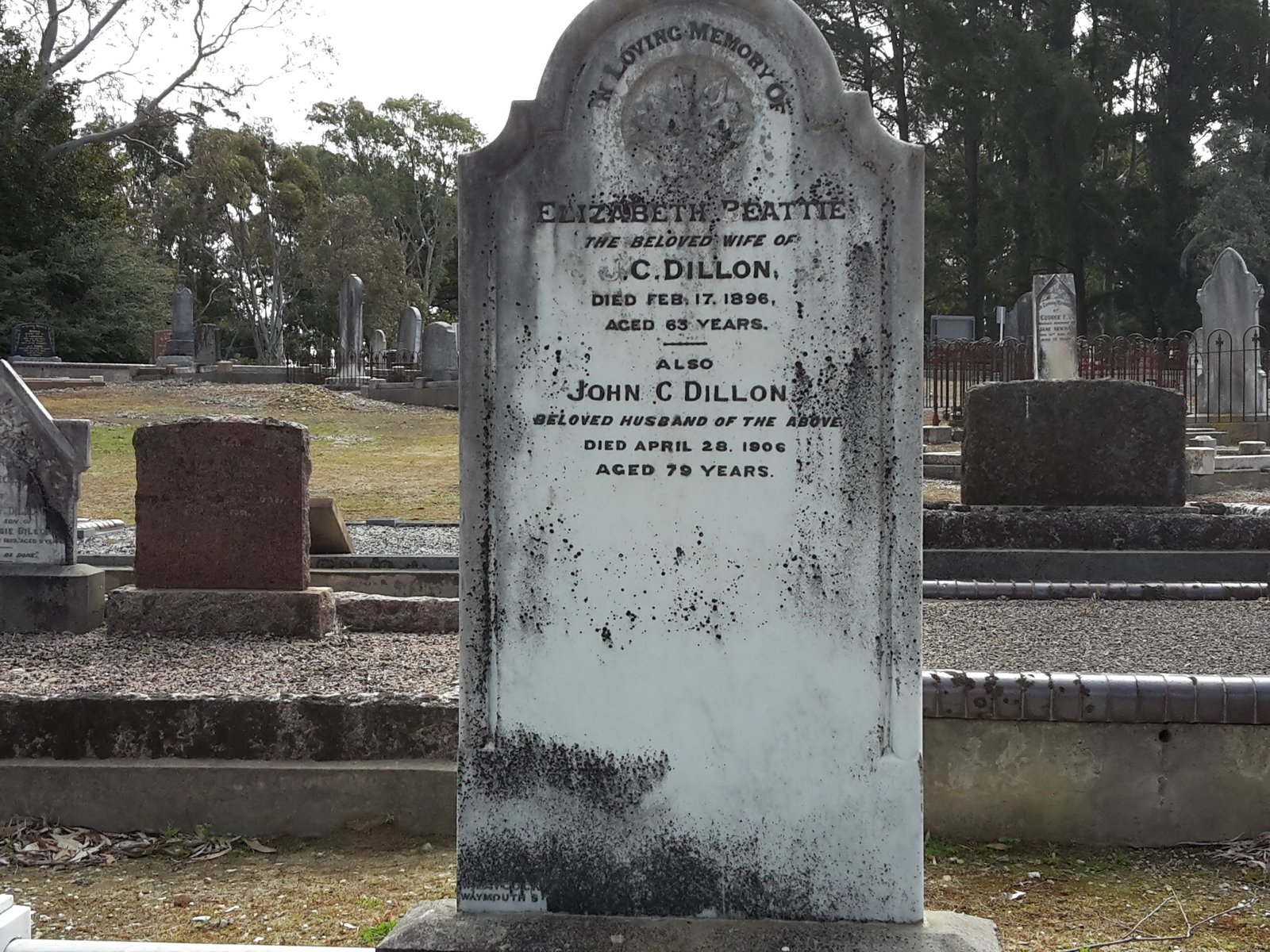
John outlived Elizabeth by ten years, passing away on 28 April 1906 at Tea Tree Gully, SA, at the age of 79. He was buried at Houghton Cemetery, adjacent to his wife's plot.
Children
| Child | Birth | Death |
|---|---|---|
| Elizabeth Esther Dillon | 1858 | 1945 |
| John Boswell Dillon | 1859 | ? |
| James Telfer Dillon | 1861 | 1951 |
| Robert Telfer Dillon | 1862 | 1942 |
| Francis Telfer Dillon | 1864 | ? |
| Henry Hatch Dillon | 1866 | 1936 |
| Margaret Dillon | 1869 | ? |
| Adam Telfer Dillon | 1870 | ? |
| Septimus Dillon | 1871 | 1946 |
Timeline
| Date | Event |
|---|---|
| 1827 | Born, Dublin, Ireland |
| ~1850s | Emigrated to South Australia |
| 18 Dec 1856 | Married Elizabeth Beattie Telfer at Chain of Ponds, SA |
| 1860 | Lodged caveat for land in Hundred of Para Wirra |
| 1858–1871 | Raised nine children at Para Wirra |
| 17 Feb 1896 | Wife Elizabeth died, Norwood, SA |
| 28 Apr 1906 | Died, Tea Tree Gully, SA (age 79) |
Sources
- FindAGrave: John Charles Dillon (memorial 192688080) — accessed 25 May 2026
- Old Prospectors — John Charles Dillon & Elizabeth Beatie — accessed 25 May 2026
- WikiTree: Telfer-148 (Elizabeth Beattie Telfer) — accessed 25 May 2026
- Trove: The South Australian Advertiser, Apr–May 1860 — land caveat notice
- From the Borders to the Bush (Donald Telfer), pp. 29, 214
Photos
Tags
Spouse
- Elizabeth Beattie Telfer (1832 – 1896)
Children
- Francis Telfer Dillon (1864 – 1942)
- Henry Hatch Dillon (1866 – 1936)
- James Telfer Dillon (1861 – 1951)
- Robert Telfer Dillon (1862 – 1942)
- Septimus Dillon (1871 – 1946)